


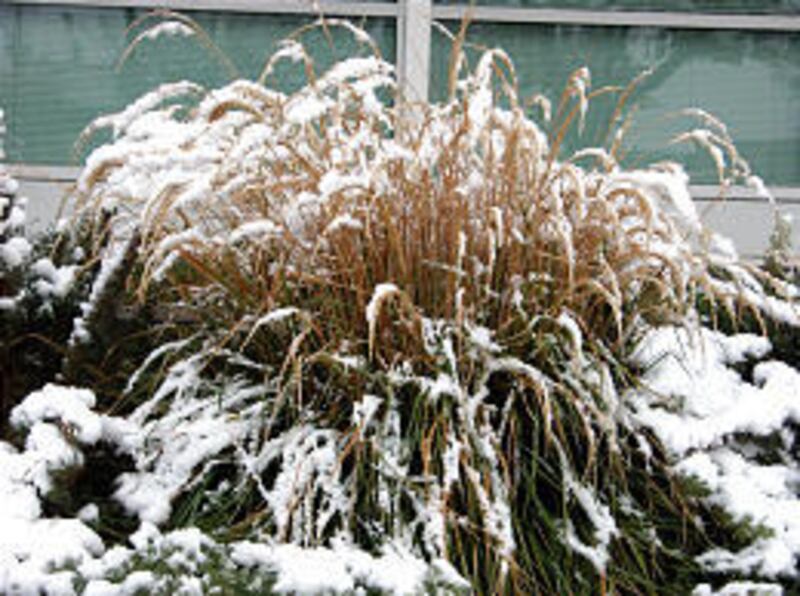
This time in the garden is often difficult. The summer and radiant fall colors have faded, and blankets of clean, white snow are beginning to cover the beds. Keeping the garden looking good is a challenge.
Astute gardeners are always on the lookout for plants that make the winter-season garden more interesting. Near the top of that group are ornamental grasses. While everything else is fading, the grasses have a charm and character all their own.
Fall blending into winter is the most interesting season for most grasses. The showy and interesting seed heads emerge in resplendent beauty. These become even more striking when covered with hoar frost during the winter. The colors change from greens to rich reds, oranges, browns and golds. These stems wave in the wind for an additional charm in the garden.
Since most other plants in the garden are dormant or gone, now is the time to research ornamental grasses for your own garden. Of the hundreds of species of grasses, some 150 different types grow as ornamentals in our area.
They are highly adaptable to most soils and require little fertilizer. The only routine care they need is to be cut to the ground in the spring. This gets rid of the old foliage and lets the new foliage re-establish.
Once established, most ornamental grasses need little water. Most are also tolerant of heat and full sun. As an added bonus, they attract few — if any pests — and almost no diseases.
Annuals include red and green fountain grasses, as well as several others. Most grasses are winter hardy, but some are tender perennial grasses grown as annuals.
When making your selections, consider all the plant-growth factors. Examine the foliage, texture and color throughout the season. Look for those with distinctive forms and showy flowers or seeds, which make excellent landscape accents or dried arrangements.
Use grasses as groundcovers, borders, screens or specimen plants. Depending on the species, ornamental grasses grow well around ponds, streams, perennial borders, rock gardens or naturalized areas.
Ornamental grasses come in myriad sizes, shapes and colors. They range in height from less than 6 inches to more than 14 feet. Some have thin, flexible stems while others have large, almost bamboo pole-like, qualities.
Spread is extremely variable, and how they spread is one of the most critical decisions in grass selection. They are divided into bunch-forming and spreading grasses.
Bunch grasses spread by tillers. New plants — or offshoots — form on the outer edges of existing plants. These are well mannered in the garden — they don't invade the surrounding areas.
Spreading grasses are great for a lawn but are sometimes a problem when planted as ornamentals. These plants also produce tillers, but they also produce rhizomes and stolons. These horizontal stems spread in all directions. The invasive qualities of these grasses are a serious drawback to their use. These grasses can quickly take over other plants in the area.
If there is one problem with selecting grasses for our area, it is that not many grasses are adapted to the shade. About the only ones that will do well here are the Japanese Forest Grass and Carex siderostica "Variegata." Most others prefer warmer, sunnier conditions.
While it is impossible to list all of the grasses that grow well in Utah, here are a few of my favorites. All are bunch-type grasses that are not invasive.
For the large specimens, plant Arundo donax or Giant Reed Grass. This grows 15 feet or taller. Many think it is a bamboo, but it isn't. The yellow-groove bamboo will grow up to 15 feet as well. Also consider northern pampas grass or plume grass.
For sheer beauty, look at some of the different species and cultivars of Miscanthus, which comes in a variety of sizes. Miscanthus' delicate feathery plumes look great and will continue to add to the garden throughout the winter.
Some drought-tolerant selections include the Great Basin Wild Rye, a Utah native, which grows to 6 feet and survives after establishment without supplemental irrigation. Add to that list the Big Bluestem and Little Bluestem, both outstanding grasses that are native to the Great Plains.
Larry A. Sagers is the regional horticulturist, Utah State University Extension at Thanksgiving Point.