
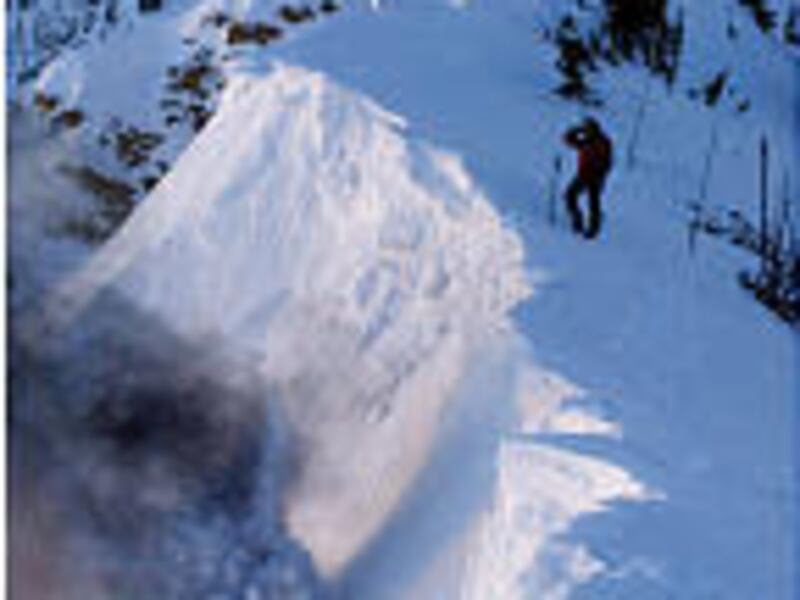
Noise does NOT trigger avalanches. Although the idea is a convenient plot device in movies, it's just a myth that just won't go away.
In 90 percent of all avalanche accidents, the victim or someone in the victim's party triggers the slide. Avalanches are the only natural hazard commonly triggered by the victim.
Dry slab avalanches account for almost all avalanche accidents. A dry slab avalanche is a cohesive plate of dry snow that fractures as a unit, and then breaks apart as it slides — like a pane of glass sliding off an inclined table.
A typical dry snow avalanche travels around 60-80 mph. An avalanche reaches those speeds within five seconds after it fractures.
Avalanches do not strike without warning. They happen in particular places due to specific combinations of snow and weather conditions. There are almost always obvious signs that these conditions exist.
Avalanches are a daily part of life in Utah. About 10,000 avalanches occur each winter in Utah. Of these, there are over 100 unintentional, human-triggered avalanche incidents in which about 20 people are caught. On average, four people die in avalanches in Utah each winter.