

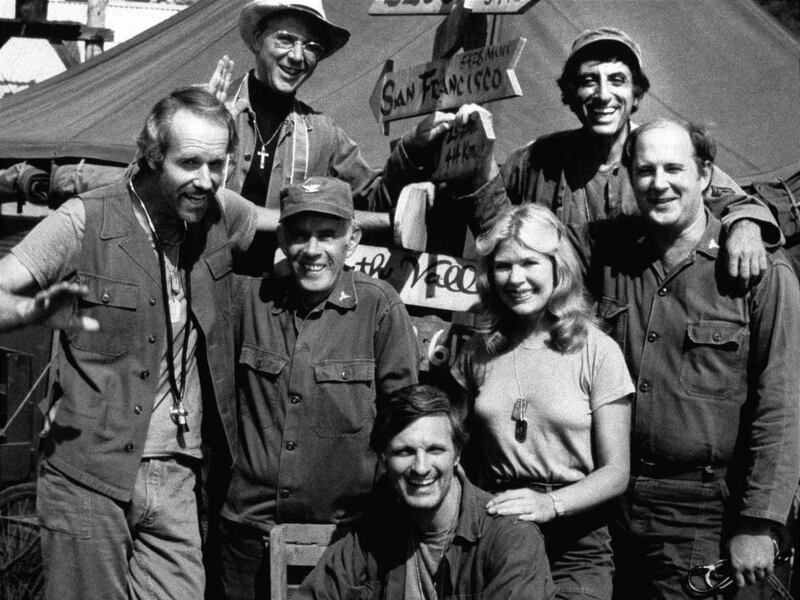


Friday's monotone was intentional. Webb wanted his character to be about the story, nothing else. But Morgan infused the show with humanity.
Renowned character actor Harry Morgan passed away Wednesday morning at the age of 96. His most memorable credits include television roles on "M*A*S*H" (1975-83) and "Dragnet" (1967-70), as well as cinematic appearances in "The Ox-Bow Incident" (1943), "High Noon" (1952), "Inherit the Wind" (1960), "How the West Was Won" (1962), "The Apple Dumpling Gang" (1975) and "The Shootist" (1976).
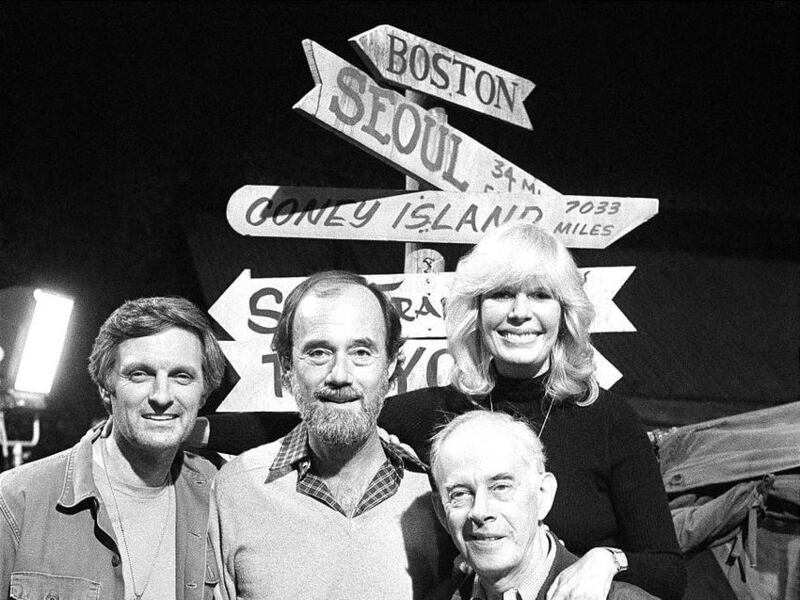
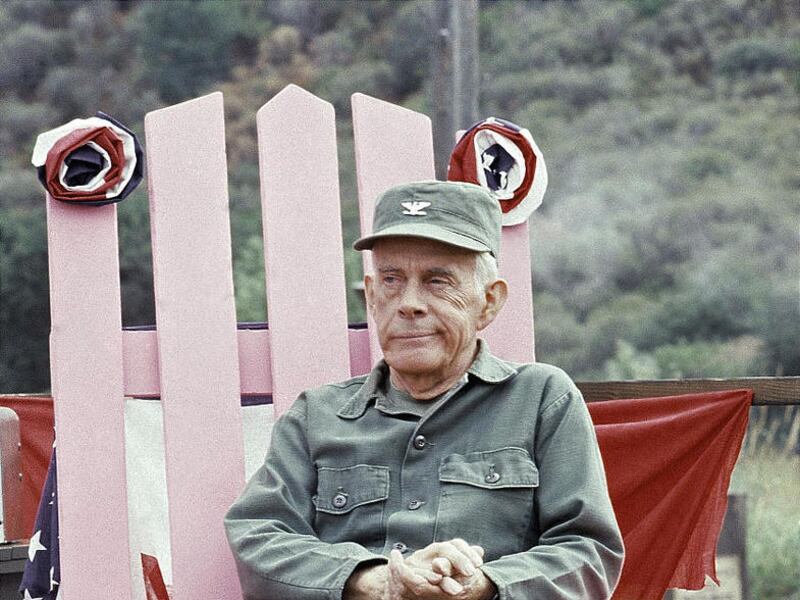
Many of Morgan's characters exhibited a sense of nobility without veering into condescension. In "M*A*S*H," for example, Morgan played Col. Sherman T. Potter, commanding officer of a surgical hospital unit during the Korean War. Obituaries that hit the Internet on Wednesday seemed to universally celebrate Morgan's portrayal of Col. Potter.
Some examples of that praise: Ned Potter wrote for ABC News that Morgan "played Col. Potter with a dry wit, a firm but kindly man in charge"; "he was the still point amid the pandemonium, a flinty corrective both to its silliness and its sentimentality," wrote Robert Lloyd for a Los Angeles Times blog;
Associated Press reported that Morgan's "wry humor, which helped him net him an Emmy for the CBS hit, carried onto the show"; and USA Today chimed in that "Morgan as Potter created one of TV's most-loved authority figures, a man firmly in charge who held sway by being the smartest (and sometimes only) adult in the room."
The Thomson Reuters blog Summary Judgment took a different tack, anointing Morgan as its "favorite judge in all of moviedom" for his role in "Inherit the Wind."
"The same deep and resonant voice and air of authority that made (Morgan) a good commanding officer (in 'M*A*S*H') translated into one heck of a jurist. With Spencer Tracy and Frederich March as opposing counsel in 'Inherit the Wind,' the 1960 retelling of the evolution-vs.-creationism Tennessee trial, there was a lot of drama and emotion to control in that courtroom. But Morgan's Judge Mel Coffey was solidly in charge."
When Morgan joined Jack Webb's second run of Dragnet on television, he became part of not only a realistic crime drama but a cultural phenomenon.
The series often worked "as a downbeat social drama," R.D. Heldenfels wrote for the Akron Beacon Journal. "Even in the '50s, Dragnet had episodes about pornography in schools, drug abuse and child molestation. Joe Friday was sometimes the only protector people had, and there were times he failed."
Morgan appeared as Sgt. Joe Friday's partner, Bill Gannon, in the show's 1967-70 run.
"From a cultural historical perspective, the timing couldn't have been better (to resurrect Dragnet)," wrote David Marc and Robert J. Thompson in their book, "Prime Time, Prime Movers: From I Love Lucy to L.A. Law, America's Greatest TV Shows and the People Who Created Them."
"With the '60s polarization bringing American society to the political cracking point, the old McCarthy-era extremism of Dragnet was given fresh life. The counterculture spawned by the Vietnam War provided Webb with a whole new range of pinko stereotypes to animate what had become the stilted tones of his '50s-style paranioa. Protesters, marijuana smokers, LSD-users, and even the occasional feminist or eco-nut showed up as obstacles to (Sgt. Joe) Friday's pledge 'to protect...and to serve.'"
Friday's monotone was intentional. Webb wanted his character to be about the story, nothing else. But Morgan infused the show with humanity. In TV.com's description of Dragnet's final episode, "The Victims," includes this note about Morgan's character, who reacts to the pain of victims and their friends: "Gannon shows us how large and tender his heart is for his fellow man."
Morgan would revealed the same heart on M*A*S*H, with his strong-but-folksy, family-oriented Col. Potter, who cried from time to time over the things of greatest importance, including his separation from his sweetheart wife.
In Prime Time, Marc and Robertson added that between Dragnet and M*A*S*H, Morgan had ... "the distinction of having costarred in what were arguably the most politically conservative and politically liberal half-hour series in the history of American television."
That diversity was no problem for Morgan's range. In his LA Times blog post, Lloyd wrote that Morgan had a "quiet power and deceptive weight with which he occupied his parts, and the focus that brought small moments alive. He could command your attention while still seeming quite ordinary; that was his particular magic."
Morgan didn't just exemplify admirable qualities when the cameras were rolling, but he also exhibited genuine modesty throughout his life. The New York Times reported, "Harry Morgan never sat as a guest on a talk show, (his son) Charles Morgan said; it did not seem appropriate or necessary. 'Appearing on a talk show to focus on himself because he was Harry Morgan,' (Charles) said, 'was not nearly as natural as appearing in a (film) role.' "
EMAIL: jaskar@desnews.com