

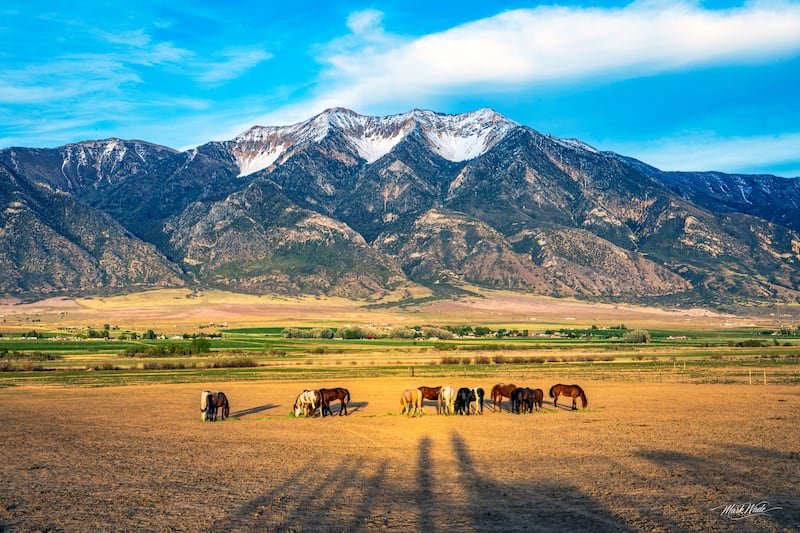

My husband and I have raised our five children in a small community in southern Texas established by German immigrants in 1849 called Boerne. It is a friendly town with strong Christian values.
Over the years, its quaintness has drawn growth. Many lament these changes with the commonly seen bumper sticker, “Boerne, Gone Forever.”
Despite the growth, Boerne has changed much less than it could have. In the last 10 years, it feels like it has been one battle after another, with residents fighting numerous development projects.
A Buc-ee’s — the famous, massive, beaver-themed gas station — has been approved since 2016. Residents only found out about the project after the city council had approved it, making it too late to stop it entirely. However, in their tenacity, Boerneites have raised numerous roadblocks to delay the project, and 10 years on, construction has still not begun. An apartment complex, a ring road, three housing developments and the Flat Rock Energy Center have all been halted over concerns about water, light pollution, traffic and the town’s charm.
Across Texas, opposition to data centers in particular has surged. In nearby San Marcos, residents successfully fought off a 200-acre data center. Just this month, Texas Gov. Greg Abbott ordered a pause on all new data-center projects while the state studies their impact on the power grid, water, infrastructure and quality of life.
A data center debate in Mona, Utah
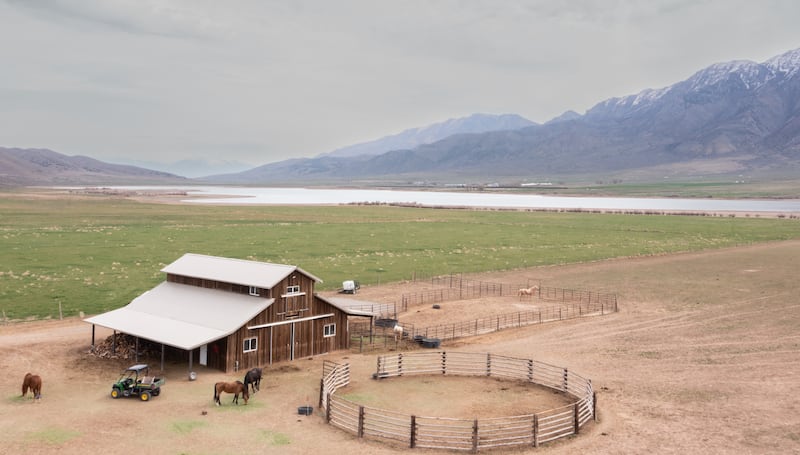
If there is one other place in the United States where my husband and I could imagine raising our children, it would be Mona, Utah — a tiny pioneer town of 2,000 settled in 1852 in the shadow of Mt. Nebo.
For a decade, our family has made the 21-hour trek every summer to visit my parents and brother. Smaller and more breathtaking than Boerne, Mona is a town where children run barefoot through the streets and ride four-wheelers to the local bakery.
Our family ties to Mona run deep. My grandfather dry-farmed there, driving each weekend from Centerville to work with his boys. In 2010, after my grandpa died, the family sold the land to my brother, Taylor Flake, who dreamed of one day moving there from New York.
His family has since integrated into the community and created a haven for horses, cows and chickens where visitors can enjoy the peace and beauty of the ranch.
My brother has learned that the Juab County Planning Commission approved the Nebo North LLC Data Center Campus Conditional Use Permit on April 15, 2026. The proposed campus would span 3 million square feet across 10 buildings.
The Mona City government appears to have limited information on this plan, learning recently about plans a developer was working on with Juab County. In a public statement last week, Mona City leaders said they had “not received any formal data center application or development requests and have not made a commitment of water, sewer, or electricity” for this data center.
It’s true some Utah community leaders welcome data centers. For instance, West Jordan Mayor Dirk Burton has argued that they help “keep the taxes low for our residents and provide the services that our residents desperately need.” In the case of Mona, however, with approvals taking place at the County level, it’s unclear whether revenue would impact city residents’ taxes.
While my brother adapted to Mona’s culture and now shares a sense of community with his neighbors, I believe these new data center neighbors will not conform to Mona ways; Mona must adapt to them.
He is concerned about the impact that the noise, traffic, heat and light pollution from a facility equivalent in size to 20 Costcos could have on a town without even a stoplight, and what those impacts could mean for his animals and his family. Locals he has spoken with share his concerns.
Is Utah ready for a fight?
As of August 2026, there are 40 operating data centers and 26 planned projects across Utah.
I originally couldn’t help but think, “What is going on in Utah?! Are they fighting back like we are in Texas? They have so much to preserve — so much beauty, a delicate environment, a unique heritage and culture, a promising next generation. Will they fight for it?”
I have since learned that Utahns are every bit as ferocious in protecting what they hold dear as any Texan. But if people don’t know what’s happening until a project is already approved, it may be too late to do much.
In Box Elder County, residents’ opposition to a massive proposed data-center project came late. They said they weren’t aware of the project’s scale until it was well into the approval process. Once they understood what was being proposed, hundreds showed up, thousands of public comments were submitted and opposition became highly organized. So far, it appears it was too late to stop it completely.

Communities deserve to know what is being proposed before projects of this magnitude are approved.
Even with the bare minimum we know about data centers, they require enormous amounts of electricity and, depending on the technology and cooling systems used, potentially huge amounts of water.
If there is one thing I know from my years of visiting Utah, it is that this is not a place that should be casually welcoming resource-hungry development without asking some very hard questions.
Every summer, as I visit my parents’ church, every prayer seems to end with a plea for “moisture.”
While God may provide, He will not stop man from taking away.
Boerne residents have stopped numerous development proposals over water concerns, and we receive two and a half times more rainfall than Mona.
Like many small-town residents, I believe some things are more enduring than technological advancement, more valuable than money and more genuine than rarely delivered economic benefits.
Values worth preserving
Utahns are blessed to live in an extraordinary place with a unique environment and heritage and strong communities.
Maybe data centers can be built responsibly. Maybe some communities will decide that the economic benefits are worth the costs. But communities should know what is being proposed before the bulldozers arrive.
Some may say, “You can’t stop progress.” I say, “You can; I have seen it.”
Progress is only positive if it is toward something beneficial. Before accepting it, we should ask: Do we want to go where this leads?

America’s small towns are the last holdouts against the temptations of modern “progress” — towns with “backward” residents willing to fight it off. Thanks to them, I still get the joy of raising my children in our quaint, peaceful little cowboy town of Boerne, still wonderfully Buc-ees-less.
I value what we’ve managed to preserve here. Like many small-town residents, I believe some things are more enduring than technological advancement, more valuable than money and more genuine than rarely delivered economic benefits. Many Americans agree, and many are now fleeing rapidly developing areas for small towns.