



- Utah filed a criminal charges against Kalshi and its co-founders alleging violations of state gambling laws.
- The federal government sued Utah to block enforcement of its anti-gambling statutes.
- The court filings are the latest in a growing legal battle over regulating prediction markets in the U.S.
Utah filed criminal charges against the popular prediction platform Kalshi and its two founders, alleging the company profited from illegally promoting gambling in the state.
The felony and misdemeanor charges in state court in Salt Lake City follow a civil lawsuit Utah filed against the company in the same court last week that argues Kalshi is subject to the state’s anti-gambling laws. The New York-based prediction market allows users to buy “event contracts” on future outcomes and earn a payout if they are correct.
At the same time, the Commodity Futures Trading Commission, which oversees prediction markets, sued the state to block enforcement of its anti-gambling laws. Utah prohibits all forms of gambling.
The flurry of legal complaints are the latest in the growing battle among states, the federal government and prediction markets regarding jurisdiction over the platforms that offer contracts based on the outcomes of real-world events from sports to politics and everything in between.
Arizona filed criminal charges against Kalshi in March, marking the first criminal prosecution ever of a CFTC-registered prediction market operator offering event contracts in the U.S.
Utah is now the second.
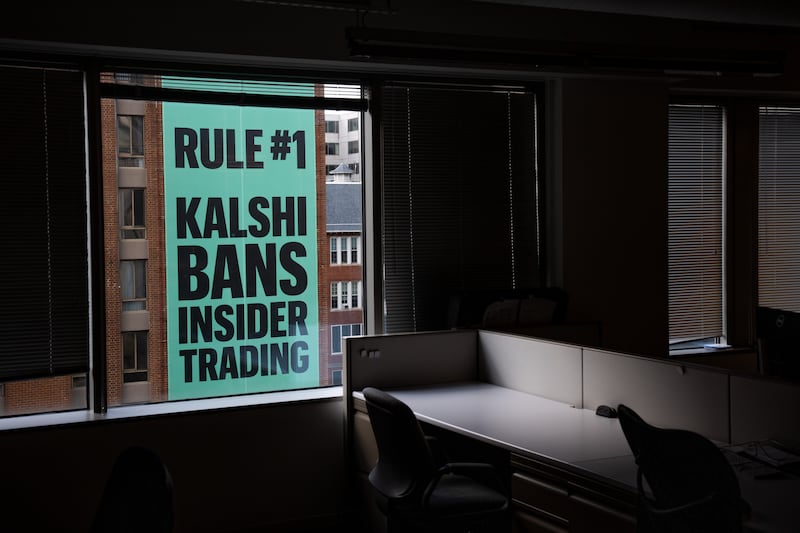
“Gambling is illegal in Utah, whether you place the bet, run the game, or promote it. Calling it a ‘prediction market’ doesn’t change what it is, and being federally registered doesn’t put a company above the law. A federal court has already ruled that Utah’s gambling laws apply to Kalshi. Kalshi kept taking bets from Utahns anyway. That is illegal, and we’re putting a stop to it,” Utah Attorney General Derek Brown said in a statement Wednesday.
When asked about the possibility of criminal charges at a news conference last week, Brown deflected the question. “When it comes to potential criminal filings, which is what you’re asking, we don’t comment on existing criminal investigations or potential criminal investigations either,” he said.
“This is a crazy overreach; Utah is clearly playing politics. We look forward to putting a stop to this in court, just like we did in Arizona,” a Kalshi spokesperson said in a statement to the Deseret News.
A federal judge issued an injunction to block the prosecution in Arizona. The state is appealing the order.
What’s in Utah’s criminal case against Kalshi?
In the criminal case, Utah charges Kalshi and its co-founders Tarek Mansour and Luana Lopes Lara with one count of pattern of unlawful activity, a second-degree felony; 12 counts of online gambling promotion, a third-degree felony; and one count of general gambling promotion, a class A misdemeanor.
According to the charges, a state investigator, Scott Eggerman, created an “undercover” Kalshi account, using an undercover name and an undercover Visa debit card on Sept. 13, 2026. The personal user information identified him as a Utah resident with a local phone number and bank account. The agent made a dozen bets over 11 days on NFL and MLB games as well as the Utah-Utah State football game and a Real Salt Lake soccer match.
For example, “Kalshi allowed Agent Eggerman to place a ‘spread wager’ of $5.00 that the University of Utah would be ahead of Utah State by 27.5 points at the end of the football game. The Kalshi platform indicated Agent Eggerman had a 53% chance for a payout. ... On September 19, 2026, at the end of the game, the University of Utah beat Utah State by 36 points, and Agent Eggerman won $4.13.”
The charges say Kalshi took a fee ranging from 3 cents to 78 cents on each transaction.
“Kalshi uses a portion of its collected operating revenue to compensate market participants (’market makers’) through incentive programs to improve Kalshi’s commercial performance,” according to the charges.
In its 63-page civil complaint, Utah claims the company made between $30.5 million and $61.1 million from bets placed by Utah accounts between February 2026 and Oct. 19, 2026. The lawsuit seeks to stop Kalshi operating in the state to pull back its “illegally obtained profits.” It asks for a court-approved geolocation provider to enforce the state’s gambling laws.
Kalshi said in a statement last week regarding the Utah lawsuit that Kalshi company is a federally regulated financial exchange, like the stock market.
“Our customers trade with each other and set the prices. As a national derivatives market overseen by the CFTC, Kalshi answers to federal law, and no single state should have a veto over it. This latest state court action does not affect our ongoing federal litigation,” said Kalshi spokesperson Jacki McGavick.
Federal government sues Utah
A week after Utah filed the lawsuit, the CFTC sued the state, contending the federal agency has “exclusive jurisdiction” over the regulation of commodity futures, options and swaps traded on federally regulated exchanges. The commission has historically monitored futures contracts on things such as livestock, crude oil, and gold and silver prices.
“The United States and the CFTC bring this action to halt defendants’ efforts to prohibit the operation of derivatives markets governed by federal law,” according to the 33-page complaint.
The federal government argues its “comprehensive” regulatory scheme “expressly and impliedly preempts state gambling law as applied to event contracts.”
The Utah Attorney General’s Office declined to comment on the federal lawsuit.
In February, Kalshi sued Utah in federal court to block the state from enforcing its gambling laws against the company. The company argued that because it operates a federally registered exchange, the state could not treat its sports bets as gambling.
U.S. District Judge Robert J. Shelby ruled in August that Utah’s anti-gambling laws apply to sports betting contracts Kalshi offers on its platform. He concluded that the federal law Kalshi relied upon in the case does not preempt the state’s ability to enforce its statutes.
That ruling factored into Utah’s decision to sue Kalshi in state court.