

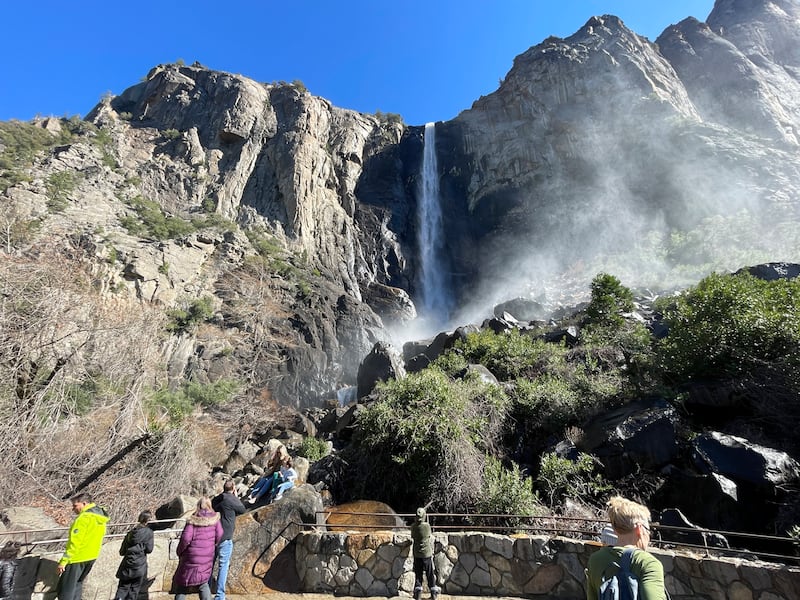

- The Interior Department is considering a deal to transfer land in Yosemite National Park to a private developer.
- More than 150 bipartisan members of Congress and conservation groups oppose the proposed land swap.
- The quarter-mile parcel would facilitate access between the national park and a private ranch property.
The Trump administration has been quietly working on a deal for more than a year that would transfer land in Yosemite National Park to a private developer.
Since 2025, the Department of the Interior has sought to convey or swap an approximately quarter-mile parcel of Yosemite that would create an access between the park and an 83-acre private ranch owned by Kingsbarn Realty Capital, a Nevada-based real estate development company.
The story was first published late last month by The Washington Sun (formerly NOTUS), which spoke with at least four officials involved in the discussions and also reviewed agency documents.
“Officials are proposing the Park Service give up the land or ‘interest’ in the land in the form of an easement, and in return receive land of equal value somewhere in California that has yet to be decided,” wrote Anna Kramer, the Washington Sun reporter who broke the story.
After the information came to light, dozens of members of Congress and conservation organizations came out against the deal as well as the idea of such action overall. Land swaps are commonplace, but those frustrated with the proposal took umbrage with the fact that the transfer would be for a private, rather than a public, interest.
“Yosemite is a national treasure preserved for the benefit of the American people. Its continued beauty, status as a wildlife sanctuary, and source of enjoyment is contingent upon preservation and proper maintenance of its land — not parts being sold off to enrich nearby private property owners,” reads a letter signed by nearly 150 senators and congressmen, mostly Democrats.
“We are extremely concerned that the Department of the Interior is considering selling off portions of the park to private development and we strongly oppose the proposed land transfer.”
Not a new proposal
Private land around Yosemite is rare, as most of the park is surrounded by national forest. Accessing the most sought after areas from those properties can be time consuming considering the long distances between park entrances.
In the case of the Kingsbarn property, it might take an hour and a half to drive to the Yosemite Valley. And, according to Kramer’s reporting for the Washington Sun, that is why Kingsbarn CEO Jeff Pori wants that specific part of land to be conveyed to his property. It could be used for a short road connecting the ranch — which could be developed into hotels, private residencies and other things — to one of the park’s existing throughways.
According to the congressional letter, this is the third incarnation of the proposed land deal. Federal courts blocked similar efforts in 2007 and 2012.
“Now that the ranch has a new owner, they are once again seeking to acquire this land to enhance the value of their property, and the political leadership at DOI is pressuring career staff to approve the exchange,” reads the letter.
“At its core, this proposal appears to provide a private benefit at the expense of land that belongs to all Americans. This transaction does not seek to expand public access to Yosemite, improve visitor services, or address transportation deficiencies in park access. Rather, this land exchange seeks to merely cut down on driving time for a select few on private property.”
What are the concerns?
In addition to worry that the proposed swap — which has yet to identify a parcel of comparable value — appears to only benefit a private interest, conservation groups expressed concern that it would introduce a new standard for public land management.
“Ceding national park land to a developer sets a dangerous precedent: America’s parks are for sale to whomever has the money and power to take them,” reads a letter to Interior Secretary Doug Burgum signed by 150 conservation and advocacy groups.
“Trading away part of that legacy to benefit a handful of wealthy, politically connected people would be an insult and a betrayal of the American public.”
The letter from the congressmen brought up a different concern, which was that the initial proposal considered using funds from the Land and Water Conservation Fund (LWCF), which was created to buy and protect public lands for the broader public.
“That fund exists to acquire and protect public lands for the benefit of the American public — not sell them off to corporate developers,” reads the congressional letter. “In response to the Department’s request to fund this exchange through the LWCF, the Senate Interior-Environment Appropriations Subcommittee did not agree to move forward on this project due to our objection.”
What’s next?
According to Kramer’s reporting, there has been a lot of internal pressure from the Department of the Interior on the National Park Service to fast track the deal.
“Staff are required to send regular updates on their progress to political appointees inside Burgum’s office, and they are occasionally berated by political staff for not moving fast enough, according to two people familiar with the process,” Kramer wrote.
For now, however, a National Park Service spokesperson told NOTUS that “no final decisions have been made.” The spokesperson did state that any such considerations or plans would follow all applicable law and reviews.
“If a proposal advances,” the spokesperson told NOTUS, “the Department would follow established procedures to ensure appropriate coordination, transparency, and public involvement, consistent with federal law.”