Deputy Utah County Attorney Ryan McBride points to Tyler Robinson as he begins his closing arguments in the preliminary hearing for Robinson, the man accused of fatally shooting Charlie Kirk, at the 4th District Court in Provo on Tuesday, Sept. 1, 2026. Francisco Kjolseth
A judge ruled Tuesday that Tyler Robinson will stand trial for the assassination of Charlie Kirk.
The prosecution is seeking the death penalty.
After 4th District Judge Tony Graf bound Robinson over for trial on all seven counts, Robinson pleaded not guilty. The charges include six felonies, including one count of aggravated murder, one count of felony discharge of a firearm causing serious bodily injury, two counts of witness tampering and two counts of obstruction of justice, and a Class A misdemeanor of a violent offense in the presence of a child.
Deputy Utah County Attorney Chad Grunander references the “shooter’s perch” during closing arguments in the preliminary hearing for Tyler Robinson, the man accused of fatally shooting Charlie Kirk, in 4th District Court in Provo on Tuesday, Sept. 1, 2026. | Francisco Kjolseth
Twenty-three-year-old Tyler Robinson was present in the courtroom during the daylong hearing, as was Erika Kirk and other friends and family close to Charlie Kirk who came to watch the proceedings.
Robinson’s mother grew emotional as Graf delivered his ruling. She was consoled by family and other loved ones as the judge found prosecutors had met the probable cause threshold for the charges against her son.
Kirk family releases statement
Charlie Kirk's parents — Robert Kirk, right, and Kathryn Kirk, center — exit the court after the final day of the preliminary hearing for Tyler Robinson, the Utah man accused of fatally shooting Charlie Kirk, at the 4th District Court in Provo on Tuesday, Sept. 1, 2026. | Tess Crowley, Deseret News
Counsel for the Kirk family asked the court to set the trial date “as soon as practically possible.”
“The United States Constitution guarantees defendants many rights. The right to delay is not among them,” said counsel for the Kirk family. “The defendant is entitled to a fair trial, and he must be given one, but nothing more is owed. We have no doubt that this court will give the defendant a fair trial. We ask that it do so swiftly.”
In a separate written statement, the Kirks said the decision “marks an important step in our family’s pursuit of justice for (Charlie Kirk).”
“Every step in this process carries the weight of all that Charlie’s murder has taken from his family, especially his children who will grow up without their father,” the statement said.
“We are grateful to all who have continued to pray for us, support us, and stand with us through a year of unimaginable grief. As the next phase of the judicial process begins, our family remains united in our love for Charlie, our commitment to the pursuit of justice, and our prayer for a transparent and timely process.”
Fourth District Court Judge Tony Graf conferences with attorneys in the case involving Tyler Robinson, charged in the fatal shooting of Charlie Kirk, during closing arguments at his preliminary hearing in 4th District Court in Provo on Tuesday, Sept. 1, 2026. | Francisco Kjolseth
After the judge made his ruling, prosecutors and defense attorneys went back and forth over a timeline for the next hearing.
“The state would take this case to trial tomorrow if we could judge,” Chad Grunander, a lawyer for the prosecution, said in his final remarks.
“It’s been 356 days since Tyler Robinson assassinated Charlie Kirk. It’s time for him, the defendant, to be bound over for trial and arraigned, today.”
Grununder said he would like to come back for the next hearing “as soon as possible,” and within two weeks if the court allows.
Kathryn Nester, one of Robinson’s defense lawyers, said the case is “obviously a complex” case that will “involve some lengthy discussions with the state,” as she recommended 30 days until the next hearing.
Tyler Robinson, charged in the fatal shooting of Charlie Kirk, speaks with defense attorney Staci Visser as he sits during a preliminary hearing in 4th District Court in Provo on Tuesday, Sept. 1, 2026. | Francisco Kjolseth
A pretrial conference will be held on Oct. 23, 2026, at 1:00 p.m. The Kirk family lawyer, Jeffrey Neiman, asked that since the date is nearly two months away, a trial date should be set to ensure the Kirk family gets their right to a speedy trial.
“Charlie devoted his life to building a community of over a million young people rooted in faith and freedom. He had hard conversations others were too afraid to have. Charlie was the opposite of hate,” he said.
Erika cried as she nodded her head in agreement as Neiman spoke. Kirk’s mother, next to her, was visibly emotional as well.
Continuing, Neiman said, “Firing a bullet into a crowd and assassinating him? That is hate. And the United States Constitution guarantees criminal defendants many rights. The right to delay is not among them. The defendant is entitled to a fair trial, and he must be given one, but nothing more is owed.”
Kirk supporters wearing Turning Point USA merchandise waited outside the Provo courthouse Tuesday evening as his loved ones departed following the ruling.
Watch live
Updates from the hearing
Erika Kirk, Kirk’s parents and Andrew Kolvet, a TPUSA spokesperson and a close friend to Charlie Kirk, sat toward the back of the courtroom gallery.
Robinson’s parents were in the front row of the gallery.
The prosecution, in Tuesday’s closing arguments, said there is “a mountain of evidence” that proves Robinson shot Kirk.
“We know that the defendant is the shooter, again, first because of the video evidence, second because of the DNA, third because of his admissions, and fourth because of the circumstantial evidence,” Deputy Utah County Attorney Ryan McBride said. “We have in this case the classic circumstantial evidence of motive, means and opportunity — and then some.”
Attorney Jeffrey Neiman, representing the Kirk family, is pictured in court during the Tyler Robinson case, who is charged in the fatal shooting of Charlie Kirk, in 4th District Court in Provo on Tuesday, Sept. 1, 2026. | Francisco Kjolseth
Robinson’s defense attorneys argued the prosecution was “stretching considerably the difference between evidence and inferences” in the evidence they provided.
While each side presented their arguments and corresponding evidence, Graf said he took 24 pages worth of notes, which he reviewed during the final recess before releasing his ruling.
“Going into today’s hearing, I read the briefs, looked at the evidence time and time again and came in with a basic format of my ruling, but I ... felt it was important not to reach ultimate conclusions until after the oral argument,” Graf said before announcing his ruling.
Tyler Robinson, center, charged in the fatal shooting of Charlie Kirk, sits with defense attorneys Kathryn Nester, left, and Staci Visser during a preliminary hearing in 4th District Court in Provo on Tuesday, Sept. 1, 2026. | Francisco Kjolseth
Prosecution says there is substantial evidence for motive
McBride said Kirk was an “outspoken critic” of homosexuality and transgenderism. At the time of the shooting, Robinson was living in a homosexual relationship with a man considering a gender transition.
“It’s not difficult to understand the motive here,” McBride said. “The defendant’s views were repugnant to the positions that Charlie Kirk famously took.”
McBride read a letter he said Robinson wrote to Lance Twiggs.
“I went on a mission to take out Charlie Kirk,” the letter said. “I wish we could have lived in a place where this was not necessary. I wish I could have stayed for you and lived our lives together.”
Evidence is shown in court for the case involving Tyler Robinson, charged in the fatal shooting of Charlie Kirk, during closing arguments at his preliminary hearing in 4th District Court in Provo on Tuesday, Sept. 1, 2026. | Francisco Kjolseth
The defense said there is not sufficient evidence to prove that Robinson’s homosexual lifestyle was motivation for an attempted assassination.
“There’s no evidence as to really what was in Mr. Robinson’s mind, if in fact he was the shooter, about Charlie Kirk,” said Richard Novak, a defense lawyer.
Novak claimed what is “true” is “that Mr. Kirk spoke hatefully of certain groups of people,” including people, Novak said, “who don’t have traditional norm-conforming gender identities” or have sexual relations out of marriage or are not in heterosexual relationships," he said.
Kirk’s loved ones could be seen shaking their heads and crying after Novak’s comments.
Defense and prosecution disagree on whether Robinson knowingly risked other lives
Deputy Utah County Attorney Ryan McBride during closing arguments in the preliminary hearing for Tyler Robinson, the man accused of fatally shooting Charlie Kirk, at the 4th District Court in Provo on Tuesday, Sept. 1, 2026. | Francisco Kjolseth
The prosecution argued that Robinson was aware he was endangering the lives of others attending the rally at Utah Valley University when he allegedly fired at Kirk. McBride argued that Robinson knew there was a possibility his shot would miss Kirk and strike someone else.
“You can’t shoot a rifle into a crowd of 3,000 people without knowing that you create a great risk of death for all those around your target,” McBride said. “You just can’t do it. It’s common sense.”
Staci Visser, a lawyer for the defense, argued the aggravating factor did not apply to this case.
“There were no actual threats by the assailant to the third party,” Visser said. “There was no evidence that would suggest that anyone else was threatened.”
In response, to the defense’s argument, Grunander said that “the defendant, frankly your honor, was gambling with innocent lives when he took that shot.”
Kirk’s widow and his parents could be seen dropping their heads, with a loved one comforting Kirk, as Grunander pointed out that it was “fortunate” for others in the crowd that day, but obviously not for Kirk.
Robinson’s lawyers argue Robinson may not have known children were present
Tyler Robinson, charged in the fatal shooting of Charlie Kirk, speaks with defense attorney Staci Visser as Deputy Utah County Attorney Chad Grunander offers a rebuttal during closing arguments in 4th District Court in Provo on Tuesday, Sept. 1, 2026. | Francisco Kjolseth
In addition to murder charges, the state seeks to assign a misdemeanor to Robinson for committing an act of violence in front of children. The prosecution said Robinson must have known children were present.
The defense said the state was making inferences using the information available, and argued no reasonable inferences can be made with evidence provided to support the state’s argument that Robinson was aware children were present.
“One cannot take Mr. McBride’s careful analysis of photographs after-the-fact and import that into what somebody on the edge of the roof saw,” Novak said. “I don’t think every inference has to be treated as a reasonable inference by the court just because the state says you can infer.”
McBride provided photographs that showed multiple children were in attendance at the event.
Arguments over what was shown in the courtroom
In the morning, before arguments began, Graf asked prosecutors that, before each image is shown, McBride be clear about what the courtroom is about to see so that the victim representatives and anyone else who wishes to leave can be escorted out of the courtroom.
During the discussion, Kirk appeared to put her head down multiple times.
The first two hours in court were spent with the defense and the prosecution arguing over what information and exhibits would be allowed for presentation, both within the courtroom and to the broader public.
Fourth District Court Judge Tony Graf speaks during a preliminary hearing for Tyler Robinson, the Utah man accused of fatally shooting Charlie Kirk, at the 4th District Court in Provo on Tuesday, Sept. 1, 2026. | Francisco Kjolseth
Representation for the defense argued that some information, if unclassified, may influence the jury and undermine the defendant’s right to a fair trial.
Graf repeatedly said that the court seeks to balance “the interest of transparency” with the rights of the defendant.
“I am trying to balance the constitutional rights of all parties and while still trying to maintain transparency and safeguarding what should or should not be published,” the judge said.
Meanwhile, the defense used their witnesses and cross-examinations to try to convince Graf that there is insufficient evidence against the defendant.
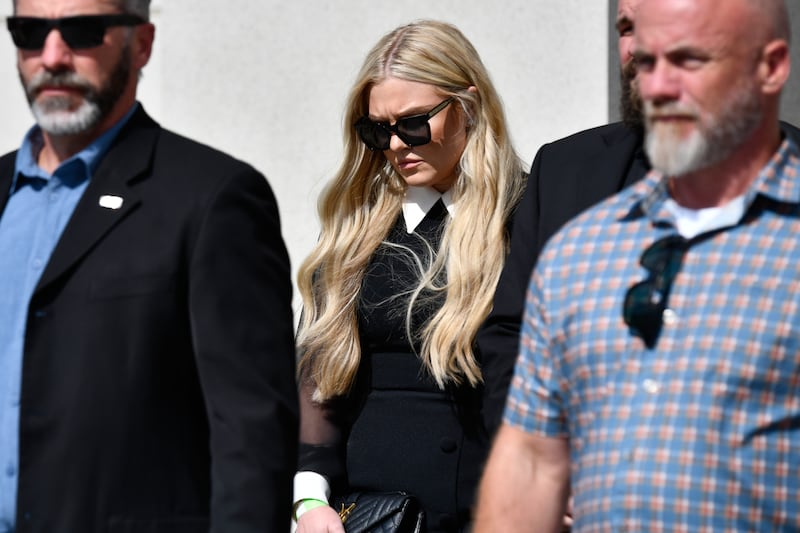
Erika Kirk leaves the 4th District Courthouse, Monday, July 6, 2026, in Provo, Utah, after a hearing for Tyler Robinson, accused in the fatal shooting of Charlie Kirk. | Marielle Scott, Associated Press
Rather than hear closing arguments in July, Graf granted a defense motion that allowed both parties to submit written closing arguments.
“The big question,” attorney Katie Zacharia said, is whether or not the prosecution can “charge him on capital punishment.”
“I think that the state has really proven to be able to take this case to trial,” Zacharia said on “Fox and Friends.” “They’ve been able to prove that the shooter knew that he could harm other people in the crowd and around Charlie Kirk, and I think we’re going to see this play out.”
Charlie Kirk's parents — Robert Kirk, right, and Kathryn Kirk, center — arrive for the final day of the preliminary hearing for Tyler Robinson, the Utah man accused of fatally shooting Charlie Kirk, at the 4th District Court in Provo on Tuesday, Sept. 1, 2026. | Tess Crowley, Deseret News
154
Comments
The prosecution said the case against Robinson is “as straight-forward a bindover decision as this court will ever see” and argues the evidence clears the relatively low probable cause threshold on all seven counts.
The prosecution also stated that the “Defendant created a great risk of death to everyone who was in his line of fire, or who was near Mr. Kirk when Defendant pulled the trigger.”
Law enforcement watches outside as people arrive for the final day of the preliminary hearing for Tyler Robinson, the Utah man accused of fatally shooting Charlie Kirk, at the 4th District Court in Provo on Tuesday, Sept. 1, 2026. | Tess Crowley, Deseret News
In their briefing, Robinson’s defense attorneys argued that the state failed to make the case that he “knowingly created a great risk of death to another other than Charlie Kirk” because the shooter “hit its intended target,” and because of that, “the single factor of proximity fails to permit an inference of a subjective knowledge of the shooter of a high probability of risk of death to others.”
His legal counsel also claimed the “line of fire” argument, which they accused the state of “broadly” using, does not hold up. Videos of the Sept. 10 event at Utah Valley University, they argue, undermine that theory because the shot came from an elevated angle and those standing in front of Kirk weren’t in the bullet’s path.
Photo Gallery: 1 of 15
1 of 15
Ethan Ward, member of the Turning Point USA chapter at UVU, center, crosses his fingers as he learns the ruling while watching the court livestream outside the 4th District Court in Provo during the final day of the preliminary hearing for Tyler Robinson, the Utah man accused of fatally shooting Charlie Kirk, at the 4th District Court in Provo on Tuesday, Sept. 1, 2026. Judge Tony F. Graf Jr. of the Utah Fourth Judicial District Court ruled Tuesday that Tyler Robinson will go to trial for the assassination of Charlie Kirk. Robinson faces six felony charges, including aggravated murder, witness tampering and obstruction of justice. He also faces the Class A misdemeanor of a violent offense in the presence of a child. The prosecution is seeking the death penalty. | Tess Crowley, Deseret News
Photo Gallery: 2 of 15
2 of 15
Ethan Ward, member of the Turning Point USA chapter at UVU, watches the court livestream outside the 4th District Court in Provo to learn the ruling during the final day of the preliminary hearing for Tyler Robinson, the Utah man accused of fatally shooting Charlie Kirk, at the 4th District Court in Provo on Tuesday, Sept. 1, 2026. Judge Tony F. Graf Jr. of the Utah Fourth Judicial District Court ruled Tuesday that Tyler Robinson will go to trial for the assassination of Charlie Kirk. Robinson faces six felony charges, including aggravated murder, witness tampering and obstruction of justice. He also faces the Class A misdemeanor of a violent offense in the presence of a child. The prosecution is seeking the death penalty. | Tess Crowley, Deseret News
Photo Gallery: 3 of 15
3 of 15
Members of the media and Turning Point USA wait to see people exit the court after the final day of the preliminary hearing for Tyler Robinson, the Utah man accused of fatally shooting Charlie Kirk, at the 4th District Court in Provo on Tuesday, Sept. 1, 2026. | Tess Crowley, Deseret News
Photo Gallery: 4 of 15
4 of 15
A Utah County deputy sheriff stands watch as people exit after the final day of the preliminary hearing for Tyler Robinson, the Utah man accused of fatally shooting Charlie Kirk, at the 4th District Court in Provo on Tuesday, Sept. 1, 2026. | Tess Crowley, Deseret News
Photo Gallery: 5 of 15
5 of 15
Ethan Ward, member of the Turning Point USA chapter at UVU, center, and others react while watching the court livestream outside the 4th District Court in Provo to learn the ruling during the final day of the preliminary hearing for Tyler Robinson, the Utah man accused of fatally shooting Charlie Kirk, at the 4th District Court in Provo on Tuesday, Sept. 1, 2026. Judge Tony F. Graf Jr. of the Utah Fourth Judicial District Court ruled Tuesday that Tyler Robinson will go to trial for the assassination of Charlie Kirk. Robinson faces six felony charges, including aggravated murder, witness tampering and obstruction of justice. He also faces the Class A misdemeanor of a violent offense in the presence of a child. The prosecution is seeking the death penalty. | Tess Crowley, Deseret News
Photo Gallery: 6 of 15
6 of 15
Members of Turning Point USA watch the court livestream outside the 4th District Court in Provo to learn the ruling during the final day of the preliminary hearing for Tyler Robinson, the Utah man accused of fatally shooting Charlie Kirk, at the 4th District Court in Provo on Tuesday, Sept. 1, 2026. Judge Tony F. Graf Jr. of the Utah Fourth Judicial District Court ruled Tuesday that Tyler Robinson will go to trial for the assassination of Charlie Kirk. Robinson faces six felony charges, including aggravated murder, witness tampering and obstruction of justice. He also faces the Class A misdemeanor of a violent offense in the presence of a child. The prosecution is seeking the death penalty. | Tess Crowley, Deseret News
Photo Gallery: 7 of 15
7 of 15
Members of Turning Point USA watch the court livestream outside the 4th District Court in Provo to learn the ruling during the final day of the preliminary hearing for Tyler Robinson, the Utah man accused of fatally shooting Charlie Kirk, at the 4th District Court in Provo on Tuesday, Sept. 1, 2026. Judge Tony F. Graf Jr. of the Utah Fourth Judicial District Court ruled Tuesday that Tyler Robinson will go to trial for the assassination of Charlie Kirk. Robinson faces six felony charges, including aggravated murder, witness tampering and obstruction of justice. He also faces the Class A misdemeanor of a violent offense in the presence of a child. The prosecution is seeking the death penalty. | Tess Crowley, Deseret News
Photo Gallery: 8 of 15
8 of 15
Karissa Behunin, member of the Turning Point USA BYU chapter, left; and Emilie Lepore, member of the Turning Point USA BYU chapter, center, and others watch the court livestream outside the 4th District Court in Provo to learn the ruling during the final day of the preliminary hearing for Tyler Robinson, the Utah man accused of fatally shooting Charlie Kirk, at the 4th District Court in Provo on Tuesday, Sept. 1, 2026. Judge Tony F. Graf Jr. of the Utah Fourth Judicial District Court ruled Tuesday that Tyler Robinson will go to trial for the assassination of Charlie Kirk. Robinson faces six felony charges, including aggravated murder, witness tampering and obstruction of justice. He also faces the Class A misdemeanor of a violent offense in the presence of a child. The prosecution is seeking the death penalty. | Tess Crowley, Deseret News
Photo Gallery: 9 of 15
9 of 15
David Sanchez, Club America field representative for Turning Point USA, left, his wife Labrea Sanchez, right, and their dog Max and son Micah Sanchez, 2, arrive to await the ruling during the final day of the preliminary hearing for Tyler Robinson, the Utah man accused of fatally shooting Charlie Kirk, at the 4th District Court in Provo on Tuesday, Sept. 1, 2026. | Tess Crowley, Deseret News
Photo Gallery: 10 of 15
10 of 15
Ethan Ward, member of the Turning Point USA chapter at UVU, center, and others watch the court livestream outside the 4th District Court in Provo to learn the ruling during the final day of the preliminary hearing for Tyler Robinson, the Utah man accused of fatally shooting Charlie Kirk, at the 4th District Court in Provo on Tuesday, Sept. 1, 2026. Judge Tony F. Graf Jr. of the Utah Fourth Judicial District Court ruled Tuesday that Tyler Robinson will go to trial for the assassination of Charlie Kirk. Robinson faces six felony charges, including aggravated murder, witness tampering and obstruction of justice. He also faces the Class A misdemeanor of a violent offense in the presence of a child. The prosecution is seeking the death penalty. | Tess Crowley, Deseret News
Photo Gallery: 11 of 15
11 of 15
Members of Turning Point USA are emotional while watching the court livestream outside the 4th District Court in Provo to learn the ruling during the final day of the preliminary hearing for Tyler Robinson, the Utah man accused of fatally shooting Charlie Kirk, at the 4th District Court in Provo on Tuesday, Sept. 1, 2026. Judge Tony F. Graf Jr. of the Utah Fourth Judicial District Court ruled Tuesday that Tyler Robinson will go to trial for the assassination of Charlie Kirk. Robinson faces six felony charges, including aggravated murder, witness tampering and obstruction of justice. He also faces the Class A misdemeanor of a violent offense in the presence of a child. The prosecution is seeking the death penalty. | Tess Crowley, Deseret News
Photo Gallery: 12 of 15
12 of 15
Ellie Snow, 16, of the Timpview Turning Point USA chapter, left; Hannah Beutler, 16, of the Timpview Turning Point USA chapter, center; and Liz Beutler, 18, a Turning Point USA member, right, wait to hear the ruling on the final day of the preliminary hearing for Tyler Robinson, the Utah man accused of fatally shooting Charlie Kirk, at the 4th District Court in Provo on Tuesday, Sept. 1, 2026. | Tess Crowley, Deseret News
Photo Gallery: 13 of 15
13 of 15
Law enforcement patrols the grounds during the final day of the preliminary hearing for Tyler Robinson, the Utah man accused of fatally shooting Charlie Kirk, at the 4th District Court in Provo on Tuesday, Sept. 1, 2026. | Tess Crowley, Deseret News
Photo Gallery: 14 of 15
14 of 15
Members of Turning Point USA arrive to await the ruling during the final day of the preliminary hearing for Tyler Robinson, the Utah man accused of fatally shooting Charlie Kirk, at the 4th District Court in Provo on Tuesday, Sept. 1, 2026. | Tess Crowley, Deseret News
Photo Gallery: 15 of 15
15 of 15
A person stands on top of the courthouse during the final day of the preliminary hearing for Tyler Robinson, the Utah man accused of fatally shooting Charlie Kirk, at the 4th District Court in Provo on Tuesday, Sept. 1, 2026. | Tess Crowley, Deseret News